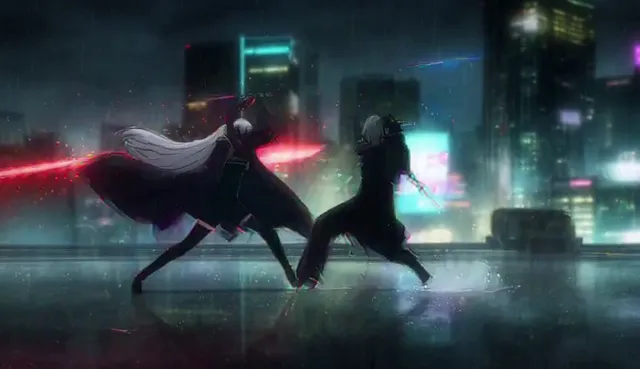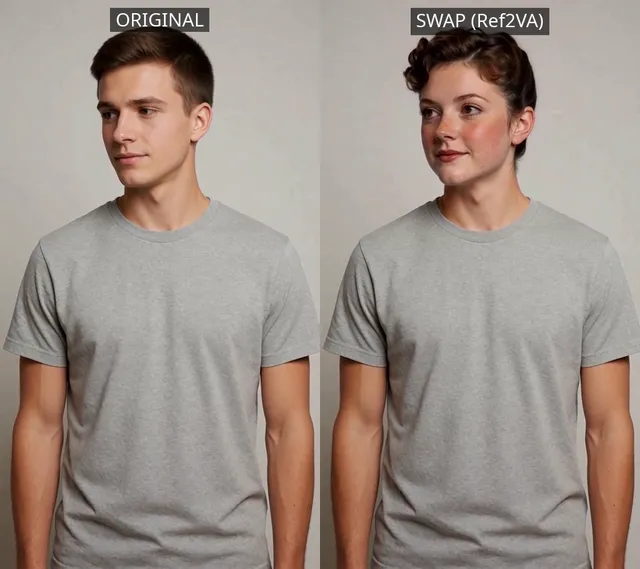
MiniMax H3 has a practical length limit per generation — you can’t just ask for 30 or 60 seconds in one shot. A YouTube channel (Laura Tech/LoRAtech) showed a custom node called Motion Director that chains multiple 5-second segments inside a single project, with motion and audio continuity between them. We’d already confirmed the node is real — j955229/ComfyUI-MiniMax-H3-Motion-Director — and this time we installed it and actually tested it on our RTX 3090, twice: once in pure image-to-video mode, and once in Reference-to-Video mode with a character sheet as an identity anchor.
At a glance
| Aspect | Details |
|---|---|
| Node | j955229/ComfyUI-MiniMax-H3-Motion-Director, GPL-3.0, v1.2.0 at the time of this test |
| Test structure | 3 segments x 120 frames = 360 frames (15.000s at 24fps), in both variants |
| I2V variant | Single reference frame, i2v mode, 319.8s, VRAM peak ~23.4GB |
| Ref2VA variant | 4-frame character sheet, r2v mode, 336.5s, VRAM peak 22.84GB |
| Test GPU | RTX 3090 24GB — a single GPU, not generalizable |
| Result | Both produce exactly 15s with no errors; Ref2VA holds protagonist identity better in close-ups; neither solves the rival character’s consistency |
Real installation: four friction points we hit in the real install
- A port already occupied by an instance without the node. A ComfyUI instance was already running on
127.0.0.1:8188before we installed Motion Director, and that server didn’t exposeMiniMaxH3MotionDirectorin its list of available nodes. We had to free its VRAM and launch a second instance on another port with a separate SQLite database so it wouldn’t interfere with the first. - Missing dependency.
scenedetectwasn’t installed and had to be added manually via pip in ComfyUI’s venv. - An attention node unavailable.
H3SLAAttentionreturned an emptyobject_infoon this install — we left it out of the graph rather than forcing it. - The GUI wouldn’t load the workflow cleanly. Opening LoRAtech’s original workflow in ComfyUI’s graphical interface produced “Failed to load subgraph blueprints” errors. It didn’t block execution via API, but it did prevent comfortably working from the GUI — we built the graph directly in API format for a reproducible run.
The original workflow also didn’t run as-is: it was set up for 1280x736 and 282 frames with the qwen3vl_32b_minimax_h3_nvfp4_awq.safetensors text encoder, which we didn’t have installed. We adapted it to 832x480 and exactly 360 frames (to land on a clean 15.000s at 24fps) using qwen3vl_32b_minimax_h3_int8_convrot.safetensors, which we already had from earlier articles — same encoder family, different quantization, the same kind of substitution we already documented in the face swap article.
Test 1: pure image-to-video mode
Full 15s project in i2v mode, prompt_batch timeline, 3 segments of 120 frames. A single reference frame (reused from our earlier PDD Acc LoRA article) starts the first segment; Motion Context takes over from there without needing a starting image for segments 2 and 3.

Left to right: reference frame, start of segment 1, boundary between segments, second segment (red energy arc), and the closing close-up in segment 3.
Seed 20260906, 4 steps, sampler er_sde, scheduler simple, cfg 1.0, video sigma shift 6.0 / audio 3.0, Motion Context on with 22 frames of context, clear_vram_between_segments on. Result: 319.822 seconds in ComfyUI, confirmed by the execution log’s timestamps, not an estimate. VRAM: ~2.6GB before starting, peaks between 19GB and 23.4GB during generation, ~2.5GB after finishing — clear_vram_between_segments worked as a real stability option, no OOM in any segment.
The result is publishable as a visual hook: clean start, characters clearly separated, coherent neon rooftop throughout, a big energy arc in the second act, and a close-up ending on the same protagonist. The real limitation: the rival reads differently between segments, and the protagonist’s own outfit (the coat design) also shifts in detail between the start and the final close-up.
Test 2: Reference-to-Video with a character sheet
Same 15s project, same Motion Director, but in r2v mode with a character reference shared across all three segments instead of a single starting frame.
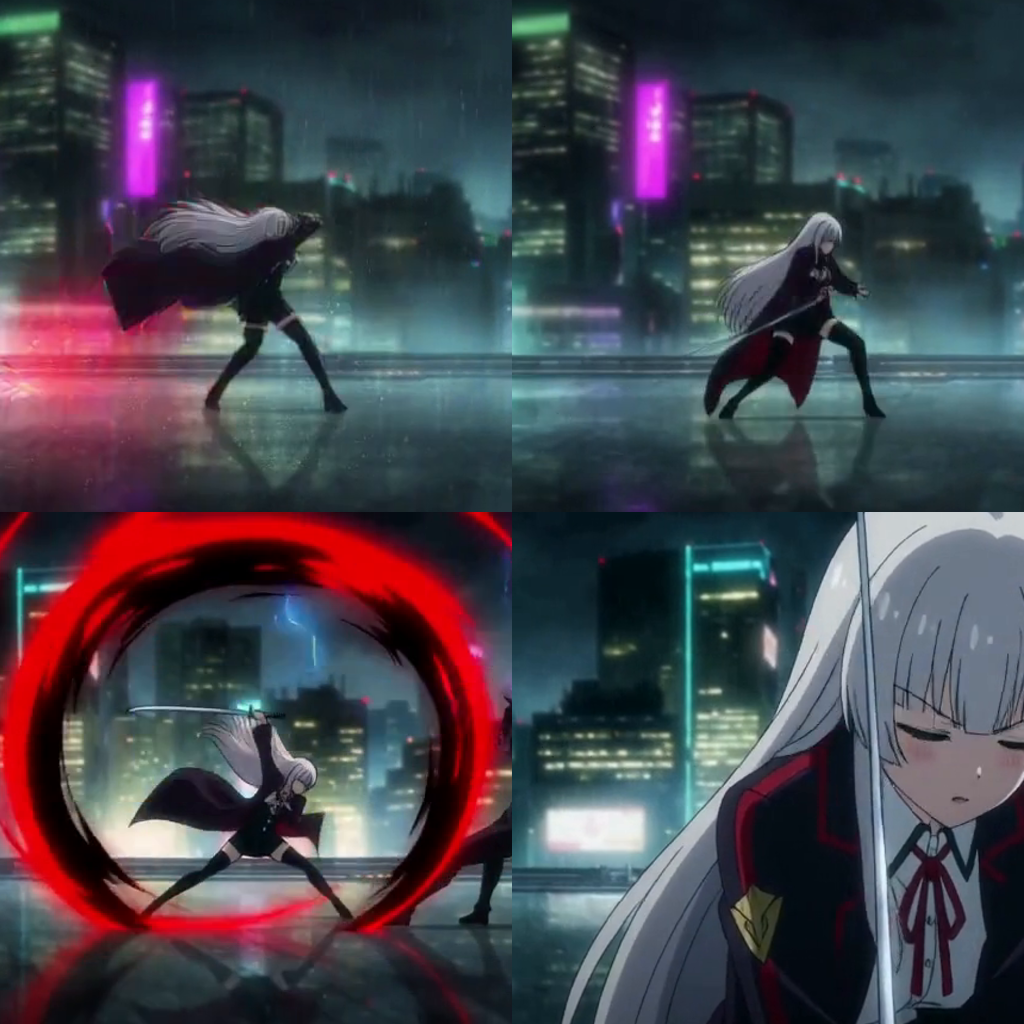
The character sheet isn’t a new image — it’s 4 frames from the I2V clip in test 1, composited into a grid and reused as the shared r2vCommon reference for this second test.
Each segment references this sheet with the token {{mmx-ref:picture:white-haired-heroine-sheet}}, which Motion Director compiles internally to <Picture 1> — confirmed in ComfyUI’s actual log:
MiniMax H3 Motion Director [批量生成 (r2v)] (segment): 3 segment(s), 360 frames @ 24.00 fps | Output: 832x480 (fixed)
#1 [0:120] 120f - r2v - <Picture 1> ...
#2 [120:240] 120f - r2v - <Picture 1> ...
#3 [240:360] 120f - r2v - <Picture 1> ...
Merged 3 segment audio clip(s) for export=all (360 frames).
Prompt executed in 336.54 seconds
Seed 202609061, same 4 steps/er_sde/simple/cfg 1.0, but video sigma shift 12.0 (double the I2V run, consistent with what we already knew about Ref2VA from our face swap article) / audio 3.0. VRAM: 2.4GB before starting (21.7GB free), observed peak 22.84GB, 2.55GB after finishing (21.58GB free) — actually lower peak VRAM than the I2V variant, though longer total time (336.54s).

The 9.8-second frame (second from the right) is the most useful as a visual piece: a clean close-up, white hair, black uniform with red trim, red ribbon, and katana all recognizable, without losing the rooftop backdrop.
We’re not presenting this as “Ref2VA wins”: the two tests don’t share the same starting condition (one frame vs. a four-frame character sheet), so it isn’t a controlled one-to-one comparison. What we can say with the evidence we have: in close-ups, the character sheet helped keep the protagonist’s recognizable traits — hair, uniform, ribbon, katana — more consistent than the single frame in test 1.
Time and VRAM: both fit in 24GB, with little to spare
| Variant | Time (ComfyUI) | VRAM peak |
|---|---|---|
| Pure I2V | 319.8s | ~23.4GB |
| Ref2VA + character sheet | 336.5s | 22.84GB |
Both figures leave little headroom on a 24GB card. We didn’t run a controlled speed comparison against generating three 5-second clips separately and stitching them by hand — these are the absolute times for each complete pass, not a measure of how much Motion Director saves versus the manual alternative.
Limitations of this test
- The two variants have different starting conditions (a single frame vs. a four-frame character sheet) — this isn’t a controlled comparison, it’s a comparison of two practical ways to use the node.
- The duel’s rival reads differently between segments in both tests — the character sheet only anchors the protagonist, not secondary characters.
- We didn’t measure whether generating the three segments separately and stitching them by hand would be faster — we only have Motion Director’s absolute times.
- We didn’t run a controlled listening evaluation of audio quality — both clips generated AAC stereo audio with no errors, but “sounds good” isn’t something we verify objectively.
- We don’t extrapolate the VRAM usage to other GPUs or resolutions — one card, one resolution.
- LoRAtech’s original workflow was never tested “as-is” at any point — it already needed adaptation just to load on this install.
Conclusion
Motion Director delivers on the project level: it lets you assemble a 15-second clip as three chained MiniMax H3 segments, with continuous motion and merged audio, without manually editing three separate MP4s together. It doesn’t automatically solve character consistency — the rival drifts in both tests, and only the character-sheet variant meaningfully improves the protagonist’s identity in close-ups. Installation had more real friction than any tutorial suggests: an occupied port, a missing dependency, an unavailable node, and a GUI that wouldn’t load the workflow cleanly.
🏆 Our recommendation
If your priority is project continuity (merged audio, motion that flows between segments, no manual editing), Motion Director delivers in either mode. If you also need the main character to stay recognizable in close-ups across the clip, use Ref2VA with a character sheet instead of I2V with a single frame — but don’t expect it to solve secondary character identity, since the rival kept drifting in our test either way. Before installing, be ready to adapt whatever workflow you download: resolution, text encoder, and some nodes may not match your install as-is.
Keep Reading
If you haven’t tried MiniMax H3 on your RTX 3090 yet, start with our Sage Attention and Sol-Attn test. If you’re after swapping identities in video with this same model, we tested real face swap with Ref2VA, including the same kind of higher sigma shift we saw here. And if you want to squeeze out fast action, we compared the 8-step PDD Acc LoRA against the 4-step turbo.
Next steps in ComfyUI
Getting started
More video and image AI workflows
- Wan 2.2 in ComfyUI: image-to-video Dual-model MoE architecture, VRAM requirements and real output.
- HunyuanVideo 1.5 in ComfyUI Real install of the I2V 480p step-distilled variant on an RTX 3090.
- 5 local AI video models tested on one RTX 3090 LTXV-2.3, SCAIL-2, Wan 2.1 and Wan 2.2, all benchmarked on the same hardware.
FAQ
- What is Motion Director and what problem does it solve?
- It's a custom node (`j955229/ComfyUI-MiniMax-H3-Motion-Director`, GPL-3.0, v1.2.0 at the time of this test) that organizes multiple MiniMax H3 generation segments -- up to 6 modes (T2V/I2V/FL2V/R2V/V2V/RV2V) -- inside a single project, with motion and audio continuity across segments. It solves MiniMax H3's practical per-generation length limit without having to manually stitch several separate MP4s together.
- Is Ref2VA with a character sheet better than pure I2V?
- We don't frame it that way, for a specific reason: the two tests don't start from the same initial condition. The I2V one starts from a single frame; the Ref2VA one starts from a reference made of four frames of the same protagonist. It's not a controlled one-to-one comparison. What we can say is that, in our test, the character sheet helped keep recognizable traits (hair, uniform, ribbon, katana) more consistent in close-ups than the single frame did.
- What real friction did you hit installing the node?
- Four things: (1) a ComfyUI instance was already listening on the default port and didn't expose the node after we installed it -- we had to free its VRAM and launch a second instance on another port with a separate database; (2) the `scenedetect` dependency was missing; (3) the `H3SLAAttention` node returned an empty `object_info` on this install, so we left it out; (4) ComfyUI's GUI showed "subgraph blueprint" errors loading the original workflow, so we built the graph directly via API instead of relying on the GUI.
- Did LoRAtech's original workflow work as-is?
- Not without adaptation. It was configured for 1280x736 and 282 frames with the `nvfp4_awq` text encoder, which we didn't have installed. We ran it at 832x480 and exactly 360 frames (to land on 15.000s at 24fps) with the `int8_convrot` text encoder we already had from earlier articles -- same family, different quantization.
- Is this faster than generating separate clips?
- We haven't measured that -- we didn't run a controlled comparison against generating three 5-second clips separately and stitching them by hand. What we do have are absolute times for each complete pass: 319.8s (I2V) and 336.5s (Ref2VA) on our RTX 3090, both for the full 15-second project.
- What still doesn't work in either test?
- The rival character (the duel's second fighter) reads differently from segment to segment in both variants -- the character sheet only anchors the protagonist, not secondary characters. The choreography also doesn't literally follow every verb in the prompt across all segments. Neither test demonstrates perfect character consistency, only reasonable project continuity.